Who needs bus franchising?
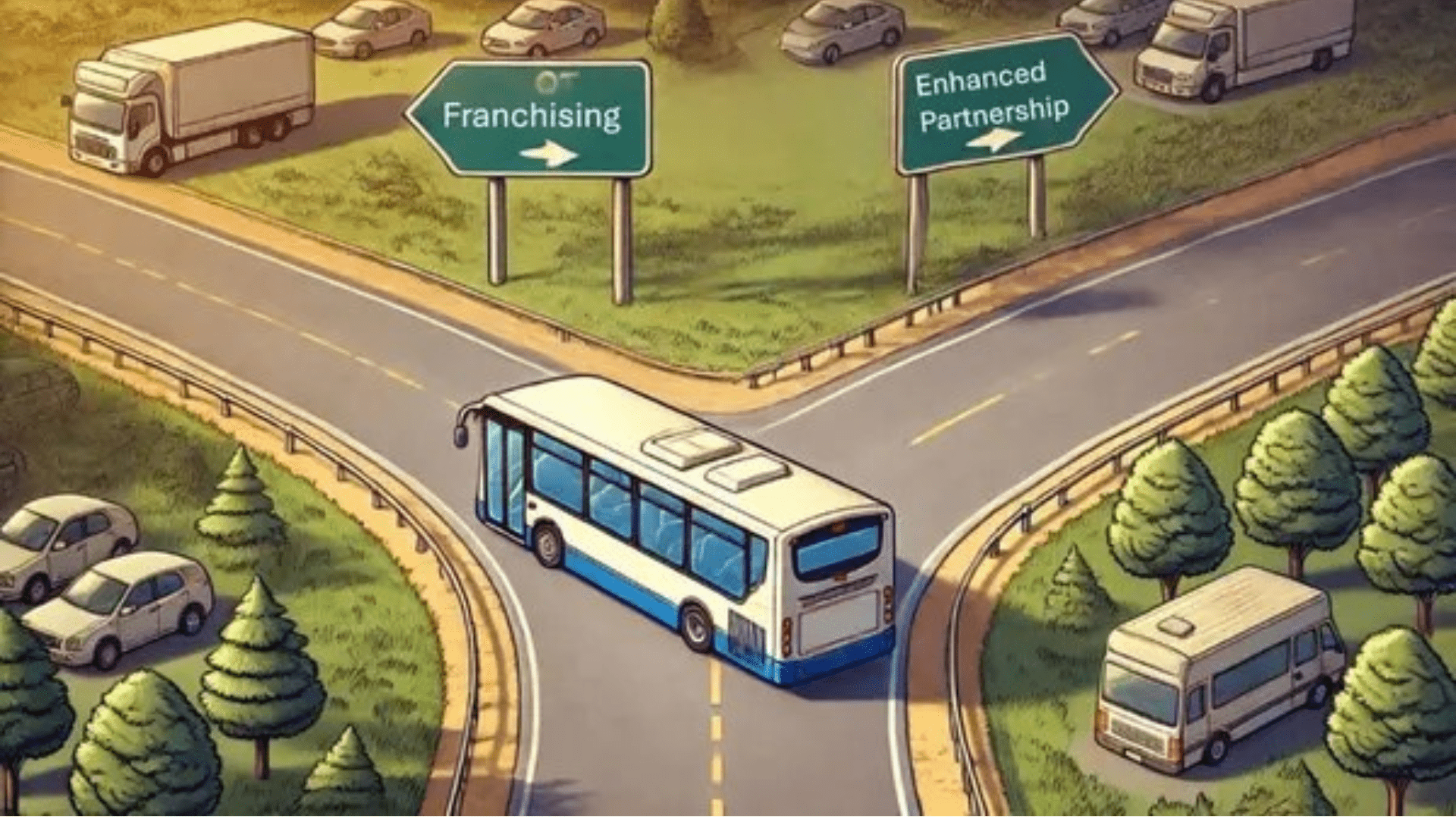
I should start by refuting a common misconception that bus franchising is only suitable for large metropolitan areas. The idea being that bus routes that go through densely populated parts of the city are profitable and could subsidise bus services in less dense areas where buses aren’t commercially viable. However, this idea implies that bus service costs in any given local authority area must be fully recoverable by fare revenue, which is rarely the case. Even in London, fare revenue covers only about 65% of bus operating cost (70% before covid). In addition, many local authorities already have a mix of commercial and subsidised routes. If they decide to introduce franchising, the same mix of commercially viable and subsidised routes will remain. There is nothing wrong or unusual with a bus system that relies on local subsidies for its operating costs.
The other reason people believe that bus franchising is suitable only for large metropolitan areas is the perceived set-up and running costs of a franchising scheme. Cost should, of course, be considered seriously. According to an analysis by Thomas Abelman, Greater Manchester’s franchising scheme cost about £700m over five years. This might sound like a scary number, however you should bear in mind two important details. One, GMCA undertook a comprehensive rebranding exercise, introduced new ticketing systems, enhanced service levels and improved performance. These components are not inherent to franchising and they could be scaled up or down based on available funding and ambition.
The second thing to remember is that the cost of franchising is, to some extent, correlated to the size of the market. If, for instance, you want to purchase depots, or invest in buses, then clearly you would need to spend less for a 10 million passenger market than for a 150m passenger market (which is the Manchester market).
Franchising is the common model in many countries in Europe, including in rural areas in the Netherlands and Sweden. Deregulated bus markets in England outside London are the exception!
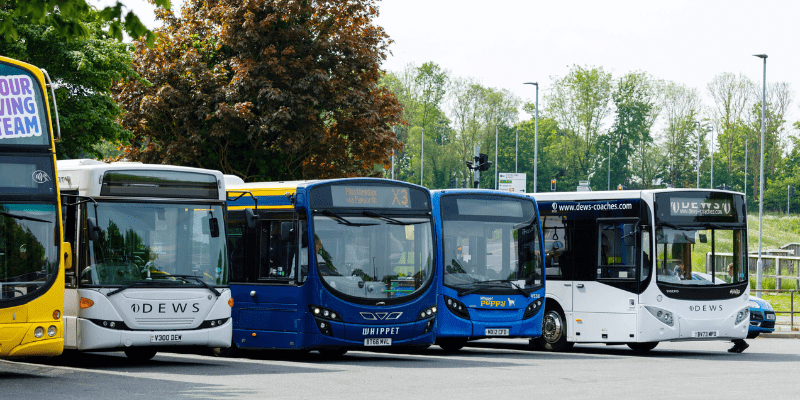
So far, I've tried to convince you that, whether you are an urban, semi-urban or a rural Local Authority, it shouldn’t matter when deciding whether franchising should be introduced. In addition, whilst the cost of franchising should be considered seriously, it could be scaled up or down depending on how you design your scheme. Next, I would like to discuss the circumstances under which bus franchising is likely to represent high value for money, or in other words, achieve a high benefit cost ratio.
For a franchising economic case to stack up and achieve a high Benefit-Cost Ratio, it needs to offer service improvements, such that the social-economic benefits (i.e., travel time savings, reduced emissions, etc.) would outweigh the costs. KPMG estimated the benefits of local bus services at £4.55 for every £1 invested, so if you plan to make a significant investment into more bus services, you can expect a healthy economic return. But there are some situations, where even without a significant investment in increased level of service, franchising is likely to produce a high economic return. Three of these circumstances are summarised below:
1. Lack of competitive pressure
The idea under deregulation was that private bus companies would compete and bring an optimal level of service and operating costs. For this to work, however, there should either be an actual competition between bus companies, or the risk of competition from new entrants. A study by the Competition Commission (now called the Competition and Markets Authority) from 2011 found that “a significant number of routes were highly likely to be subject to adverse effects on competition”. In other words, in 2011, many bus routes in England were not subject to competitive pressure, and therefore the level of service was potentially inadequate. It is reasonable to assume that many bus routes are still subject to ‘adverse effects on competition’.
A well-designed franchising scheme could address this and bring an improvement to the level of service thanks to the competitive nature of franchising procurement. Under a deregulated market, bus operators usually have higher profit margins, which allows them to remain resilient in a volatile market. However, under franchising, if the operator's income is guaranteed, they can operate at lower profit margins. This leaves more money to be spent on bus services. This is how a small investment in implementing franchising can bring about a return even without ongoing support in service uplifts.
One indicator of low competitive pressure is very low punctuality (under 70% on-time), which suggests that a reduction in the quality of the service doesn’t lead to lower market share. In addition, lack of diversity of operators could indicate low competitive pressure. Lastly, high industrial land prices (compared to the regional average) could mean that the barriers to entry are high and therefore that new entrants will struggle to source an adequately located depot.
2. Legacy network design and lack of integration
In places where there is more than one operator, it could be that competitive pressure exists, but network design and integration suffer. Since it is not within the power of any single operator to undertake a network design and integration exercise to maximise ridership, it might be that a legacy network has not evolved adequately with population changes. In addition, different ticketing options could add frictions to integration. In such cases, as part of their franchising scheme, local authorities could undertake a network redesign exercise that will increase ridership by creating better interchanges, a clear hierarchy of trunk and feeder lines, and integrated ticketing systems. This is, partly, how Ireland managed to bring about significant passenger growth (which I wrote about here). By redesigning the network, the local authority can achieve higher ridership (and therefore high value for money) without significant investment into service uplifts, but simply by using existing resources more efficiently and effectively.
3. High share of subsidised services
If a local authority already has a high share of subsidised bus services, it already has an established team in place to plan the network, procure services and manage contracts and performance. That, in turn, means that introducing franchising is going to be cheaper and easier because there are significant economies of scale in procuring and managing bus services. In addition, in a deregulated market, subsidised services can’t compete with commercial ones which makes their planning more complicated and less optimal.
This is not an exhaustive list of reasons to introduce franchising or to eliminate the option, but I think it’s a good place to begin, whether you are only starting to think about franchising, or you are looking to firm up your economic arguments.

Our experts are happy to assist you
Experts team Public transport planning
Public transport planning
Discover how we can support you to with public transport reform, fares and ticketing schemes and network reviews.